



2025 Mazda CX-30 vs 2025 Toyota C-HR
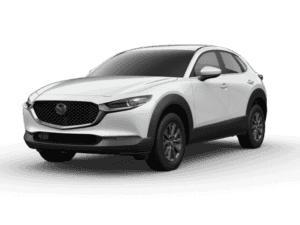 The Mazda CX-30 and the Toyota C-HR offer stylish appeal, agile handling, and practical cargo space, making them attractive options for budget-conscious buyers in Wisconsin. But which of these sub-compact SUVs meets your standards, matches your style, and fits your budget? Learn more below with information from Russ Darrow in Greenfield.
Mazda highlights a refined and premium interior in the CX-30, featuring high-quality materials such as soft-touch surfaces, available leather upholstery, and an intuitive layout. The cabin design prioritizes driver comfort, making it feel more upscale than many competitors. The exterior leans towards a more mature and sophisticated design. Its smooth, flowing lines, prominent grille, and sculpted body panels ooze a premium feel that points above its price point. The Toyota C-HR has a modern and youthful cabin with bold design elements. While comfortable, its materials and finishes lean more toward practicality than luxury with leather and suede seats and a chunky leather steering wheel. The exterior shows off sharp angles, coupe-like roofline, and distinctive rear spoiler make a statement on the road. The CX-30 offers slightly more cargo space than the C-HR, making it more practical for hauling groceries or luggage. Look good and feel good in either of these SUVs when you visit Russ Darrow today!
Take a test drive to discover the differences in power and performance between the 2025 Mazda CX-30 and the 2025 Toyota C-HR compact SUVs. Due to its high-performance handling, the CX-30 is designed for a thrilling driving experience. It features precise steering, agile handling, and a smooth ride, with standard all-wheel drive. There are two engines available for the CX-30: a standard 2.5-liter naturally aspirated four-cylinder producing 191 hp and 186 lb-feet of torque and a turbocharged 2.5-liter four-cylinder making 227 horsepower and 310 pound-feet of torque. Models with the base engine get 26 mpg city and 33 mpg highway. Turbocharged versions aim to deliver 22/30 mpg city/highway. Conversely, the C-HR is built for efficiency and commuting around the Greenfield, WI roadways. It offers a composed and easy-to-drive nature but lacks the sporty feel of the CX-30. The C-HR is front-wheel drive only, making it less capable in rough weather conditions, and it only has one engine option: a 1.8-liter self-charging hybrid powertrain with 140hp. Fuel economy ranges between 57.6 and 60.1 mpg. Schedule your test drive at Russ Darrow, and you will decide which is best for you regarding handling and acceleration.
Both the 20205 Mazda CX-30 and 2025 Toyota C-HR come standard with a suite of advanced safety features. Mazda’s i-Activsense safety suite comes standard on all eight CX-30 trims, featuring adaptive cruise control, lane departure warning, automatic emergency braking, and blind-spot monitoring. The CX-30 has earned strong safety ratings thanks to its complete suite of driver assistance features. The C-HR comes with the Toyota Safety Sense 2.5 suite, which bundles forward automatic emergency braking, pedestrian detection, adaptive cruise control, traffic sign recognition, lane-departure warning, lane-keep assist, and lane-trace assist. Regarding value for your money, the CX-30 offers a better balance of features, performance, and price refinement. Conversely, the lower starting price of the C-HR coupled with Toyota’s reputation for reliability make it the better option for budget-conscious buyers. If you like to drive and demand performance, want an upscale interior, and a sophisticated exterior, choose the Mazda. If you focus on fuel efficiency and reliability, you want a bolder and more distinctive design, and on a tighter budget, take the Toyota. Whichever you ultimately choose, you’ll always get a great deal, flexible financing, and low payment options when you shop and buy your next new CX-30 or C-HR at Russ Darrow.
0 comment(s) so far on 2025 Mazda CX-30 vs 2025 Toyota C-HR